





Pick one clear task your child already handles well, and let that be the summer baseline. Keep the task the same most days, but change its timing or size when camp, activities, or travel get in the way. When plans shift, say out loud what pauses and when the regular routine picks back up.
Start with a small, age-aware chore baseline
Choose one task the child can finish without much help, describe it in a single clear sentence, and use that as the summer starting point. Pairing that single responsibility with positive reinforcement or daily habit rewards helps make initial participation smooth. A baseline works best when everyone knows exactly what "done" looks like, so skip vague instructions like "help around the house."
HealthyChildren.org's age guide lists tasks by age as a starting menu, not a strict rule. Kids ages 5 to 7 can typically manage putting toys away, sorting laundry, or watering flowers. Ages 8 to 10 can add vacuuming and putting away their own laundry. Ages 11 to 12 can take on more, including cleaning the kitchen, doing full loads of laundry, and cooking a simple meal with supervision. For chores for teens, vacuuming shared spaces, pet care, and yard work are common options, and a summer job is not a reason to drop household contributions entirely.

Age only points you toward a reasonable starting task. The real test is whether your child can complete it consistently without a fight every time. If a child is new to chores, start with one task instead of a full list, since a long list can feel overwhelming right away.
Siblings rarely need the same chore. One child's vacuuming might take the same effort as another's full load of dishes, so match the task to the individual rather than handing out identical lists. For a closer look at balancing different workloads between siblings, see how to compare effort across siblings.
| Age band | Example tasks | Support noted |
|---|---|---|
| 5-7 years | Put toys away, sort laundry, water flowers | Minimal, mostly independent |
| 8-10 years | Vacuum, put away own laundry | Independent with occasional check-ins |
| 11-12 years | Clean kitchen, full laundry loads, simple cooking | Supervision needed for cooking |
| Teens | Vacuum shared spaces, pet care, yard work | Independent |
On camp and activity days, move or resize the task
When camp or an activity eats up the usual chore window, move the same task to another predictable time that day instead of dropping it. If a child gets home wiped out from swim team or a full day at camp, a chore right after dinner may work better than right after school.
If no reasonable window is left in the day at all, shrink the task instead of skipping it. A child who normally vacuums the whole living room could just clear the coffee table and floor space near the couch, with the full job picked up on the next open day. This keeps the routine clear chore expectations recommend, without turning a packed schedule into a source of nightly arguments.
A busy week does not mean chores disappear, but it also doesn't mean forcing the exact same task at the exact same time no matter what. If your family's chore system already feels like it's falling apart by midsummer, it can help to reset a fading chore system with a simpler version before adding activity-day flexibility on top.
For trips and changing plans, say what pauses and when chores restart
Before a trip, tell your child exactly which home-based chores pause while the family is away and which day the routine starts back up once you're home. A task like watering the yard or vacuuming the living room doesn't apply on the road, so naming it as paused avoids the confusing feeling that the chore was simply forgotten.
Pick a specific restart point, such as the first full day back home, rather than leaving it open-ended. Planning for school-break routine changes works best when the family talks through schedule shifts ahead of time instead of reacting to them once they happen. A short conversation before you leave, covering what pauses and when it resumes, prevents the guessing game on the first day back.
Make changed chores easy to see, then pick an aid if needed
Write down each active chore and mark clearly whether it's running as normal, resized for a busy day, or paused for travel. A simple paper chart or checklist on the fridge is often enough, since the goal is just making the current status visible to everyone in the house.
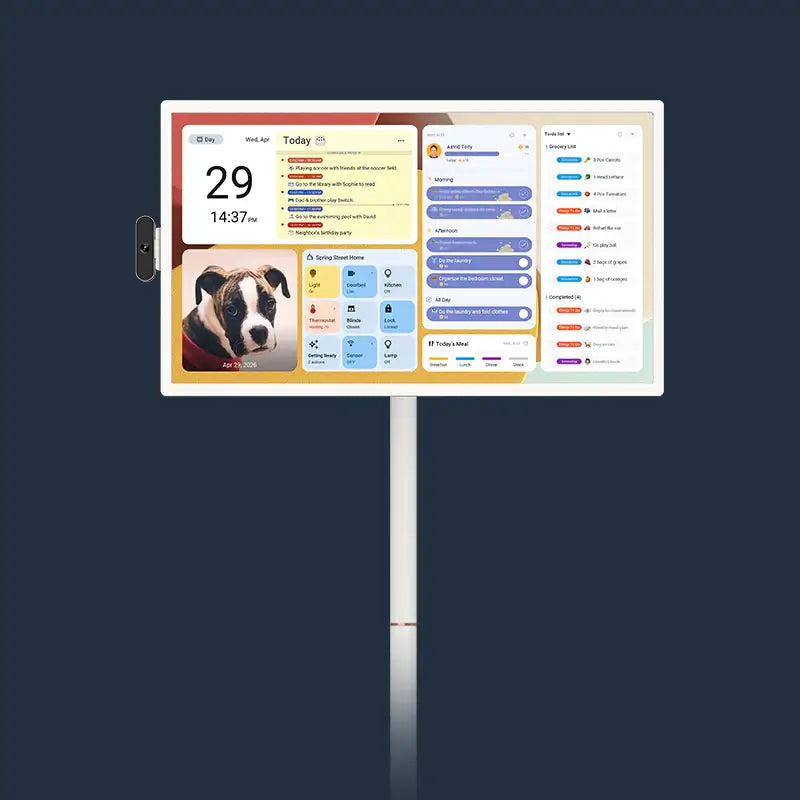
For households juggling several kids' schedules, activities, and chores at once, a shared display can make that visibility easier to keep updated without redrawing a chart every week. Our Apolosign 15.6-inch Digital Calendar syncs family calendars from Apple, Google, and Outlook in one place, and its Routines feature turns chores into points and rewards that show up right on the screen. If your family already juggles calendars across multiple accounts, browsing digital family calendars can help you compare shared-display options before deciding whether you need one.
A paper chart works fine if your household is small or your summer schedule stays fairly steady. A shared display earns its place when several people need to check chores and family plans at a glance, without hunting through separate phones. Either way, the fix is the same: keep the current chore status visible, and adjust it as the summer unfolds.
FAQs
What if my child has never had chores before this summer?
Start with just one task instead of handing over a full list at once. A single, clearly described chore gives the child something to master before adding more, which is easier to sustain than an overwhelming set of new responsibilities introduced all at once.
Is there a set number of chores every kid should do in summer?
No fixed number applies to every family. The right amount depends on the child's age, schedule, and how much free time summer actually leaves, so treat any specific count you see elsewhere as a starting idea rather than a rule to match exactly.
Should chores change on weekends versus weekdays during summer?
Nothing requires a separate weekend rule. If weekends already bring different activities or family plans, apply the same approach used for camp days or travel: keep the task recognizable, but move its timing or resize it to fit whatever the day actually looks like.