




Paper calendars fade, tear, and need manual rewriting every year. Phone calendars solve that — but they're too private for kids and grandparents to check, and no one gets a shared at-a-glance view. The real trap when buying a smart electronic family calendar isn't the design; it's the low upfront price that hides years of subscription fees. This guide breaks down the true 3-year total cost of Apolosign, Skylight, and Hearth — so you can pick the one that saves your family the most over time.
Why Families Are Switching to Electronic Calendars in 2026
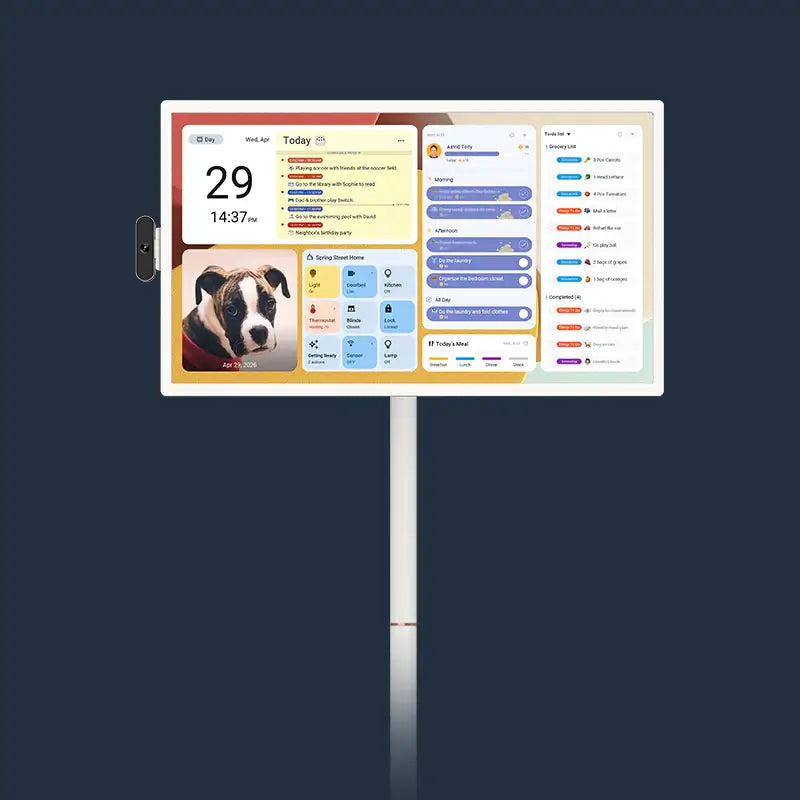
Conflicting schedules across parents and kids, forgotten chores, no consistent habit tracking, and grandparents who can't read small phone screens — these are the daily frictions driving households to smart electronic family calendars. Built for the home, these devices support cloud sync across devices, always-on updates, and combine scheduling, kids' habit tracking, family notes, and photo display into one always-visible screen.
Unlike short-cycle consumer electronics, a family calendar is a long-term home durable. The upfront price is only part of the picture — the 3-year total cost is what truly determines its value.

2026's Top Electronic Family Calendars — Full 3-Year Cost Breakdown
1. Skylight (Basic Subscription Model)
Built for small homes and minimalist needs, Skylight offers stable, mature basic scheduling with a well-polished app and zero learning curve.
- Device price: $299.99 (15" Classic frame)
- Membership: $79/year (Plus plan, first month free). Optional for basic calendar display, but required for Magic Import, photo screensaver, meal planning, and rewards.
- 3-year membership total: ~$158
- 3-year total cost: ~$457
Pros: Clean interface, easy daily operation, mature ecosystem, syncs with Apple/Google/Outlook/Yahoo/Cozi.
Cons: Subscription costs add up; without Plus, most useful features are locked.
"I tried the Skylight Digital Calendar and my life feels infinitely less chaotic." — Taste of Home, June 2026
2. Hearth (Premium Feature-Rich Subscription Model)
Focused on parenting and detailed family management, Hearth is designed for multi-child households, with specialized features for kids' habit building, mood check-ins, and chore coordination.
- Device promo price: $594.15 (original $699, 27" only)
- Membership: Required. $9/month billed monthly, or $5.76/month equivalent on the 3-year prepaid plan ($207.36 total, saves $117 vs. monthly). First 30 days free.
- 3-year membership total: ~$207.36
- 3-year total cost: ~$801
Pros: Deepest parenting features (chore rewards, routines, mood check-ins), premium aesthetic, AI Hearth Helper.
Cons: Highest upfront + subscription cost; without membership, only basic calendars and profiles work.
"While I was skeptical of the $699 price tag at first, it's quickly become something we use every day." — Taste of Home, August 2026
3. Apolosign (No-Fee, High-Value Model)
If you are looking for the best Skylight alternative, Apolosign is the ultimate digital calendar without subscription. Built for the vast majority of households, it offers a one-time purchase with zero ongoing costs — fully transparent pricing.
- Device promo price: $279 for the 15.6" desktop model (original $349, limited-time promo). 21.5" from $379, 27" from $579 (4K from $679).
- Size options: 15.6" / 21.5" / 27"
- Membership: $0 — all core features unlocked at purchase. Calendar sync, routines, to-dos, photo display, and Google Play access all included.
- 3-year total cost: Just $279 — no additional expenses ever.
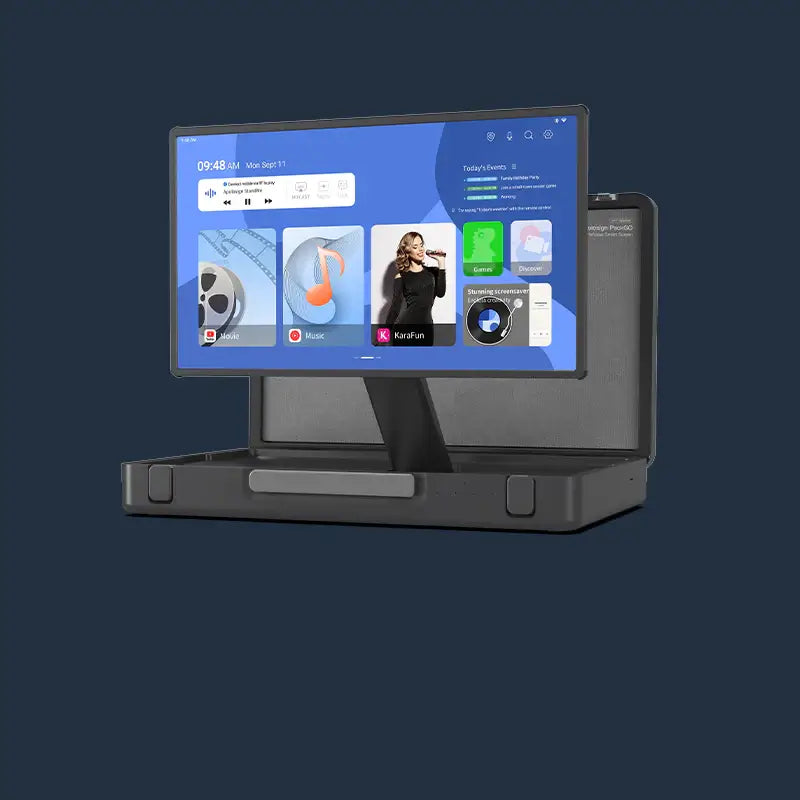
Pros: Lifetime free use, open Android system (Google Play, third-party apps), Dual-Mode (Calendar + Android), unbeatable long-term value.
Cons: No built-in battery — requires plug-in power. Note: 95% of family calendar use is wall-mounted or desk-placed near an outlet, so this is rarely a practical limitation.
"I seamlessly connected it to my Google Calendar... Calendar mode worked similarly to Skylight. It runs Google's Android OS, so it operates very similarly to an Android tablet." — Voxvine, August 2026

Side-by-Side: 3-Year Cost & Feature Comparison
|
Model |
Device Cost |
Recurring Fee |
3-Yr Membership |
3-Yr Total |
Core Features Included at Base Price |
Best For |
|
Apolosign |
$279 (15.6") |
None |
$0 |
$279 |
Calendar sync, routines, to-dos, photo display, Google Play, Dual-Mode |
Homeowners seeking long-term value |
|
Skylight |
$299.99 (15") |
Plus $79/yr, first month free |
~$158 |
~$457 |
Basic calendar display + sync (Plus required for Magic Import, meal planning, photo screensaver, rewards) |
Minimalist users okay with a small annual fee |
|
Hearth |
$594.15 (27") |
Required: $9/mo or $5.76/mo eq. (3-yr prepaid) |
~$207.36 |
~$801 |
Basic calendars + profiles only (membership required for routines, chores, rewards, AI helper) |
Multi-child families with ample budget focused on parenting features |
Cost Traps to Avoid
Trap 1: Low Price + Long-Term Subscription (Skylight, Hearth) Most shoppers only see the low hardware price and miss the "low-price hook + long-term subscription" playbook. Auto-charge kicks in after the free trial — miss a renewal, and core features lock immediately. Skylight's $299.99 looks reasonable until you add $79/year for features that make it useful; Hearth's $594 is just the entry fee to a mandatory membership.
Trap 2: Bare-Bones Basics, Everything Else Paid (Hearth) Some devices ship with minimal features. Essentials like habit tracking, chore coordination, and photo display require paid upgrades later — adding up to far more than the device itself. Hearth without a membership leaves only calendars and profiles; routines, chores, rewards, and AI are all paywalled.
Trap 3: No Warranty — Replacement Becomes a Hidden Cost Some brands lack solid warranty coverage. If the device breaks, replacement becomes an extra hidden expense, pushing the 3-year cost even higher. Always check warranty length and coverage before buying.

Final Recommendation
For long-term value seekers: Apolosign is the clear winner at $279 total over 3 years. One-time purchase, zero recurring fees, and an open Android system that expands over time without extra cost. The longer you own it, the more you save versus subscription competitors.
For minimalist / light users: Skylight (~$457 over 3 years) is easy to set up and operate with a polished interface. It's a solid choice if you only need basic scheduling and don't mind the $79/year Plus fee for extras like Magic Import and photo screensaver.
For multi-child families focused on parenting: Hearth (~$801 over 3 years) offers the deepest chore-reward and routine features. It's the most expensive by far, but worth it if you have a larger budget and will actually use every parenting-specific tool.
All three mainstream electronic family calendars in 2026 have their use cases, but the long-term cost gap is staggering — the difference in 3-year total spend exceeds $500. The upfront price is just the entry cost; ongoing membership fees and feature unlocks are what truly determine a device's value.
For most ordinary families, a transparent, lifetime-free, buy-it-once model fits long-term home use far better than a subscription model.
Ready to simplify your family’s schedule without the hidden fees?
Stop paying for subscriptions. Choose the Apolosign Digital Calendar and save over $170 to $500+ compared to competitors over the next 3 years.
🛒 Shop Apolosign Now - Zero Subscription Fees
Available in 15.6", 21.5", and 27" 4K displays.

FAQ
Q:Is a subscription-based family calendar worth it?
It depends on how much you use the premium features. If routines, meal planning, AI assistance, rewards, companion apps, or other advanced tools become an important part of your family's daily workflow, the recurring cost may be worthwhile.
If you mainly need a shared calendar and basic household organization, a lower-cost or subscription-free option may provide better value.
Q: Do I need a subscription to use Apolosign?
No. Apolosign has zero subscription or membership fees. All core features — calendar sync, routines, to-do lists, photo display, and Google Play access — are unlocked at purchase with no ongoing charges.
Q: Which electronic family calendar is cheapest over 3 years?
Apolosign, by a wide margin. At $279 total (15.6" model, no subscription), it costs $178 less than Skylight (~$457) and $522 less than Hearth (~$801) over three years. The gap widens the longer you own it.
Q: What size should I get for my family?
The 15.6" is ideal for desks and small families (1-2 kids). The 21.5" is most popular for kitchen walls and medium families (2-3 kids). The 27" suits large open-plan spaces and families with 3+ kids. Apolosign offers all three sizes; Skylight offers 15" and 27"; Hearth only comes in 27".
Q: Does Apolosign sync with Google Calendar, Apple Calendar, and Outlook?
Yes. Apolosign supports auto-sync with Google Calendar, Apple Calendar (iCloud), Outlook, and other major services via CalDAV. The open Android system also lets you install any calendar app from Google Play for specific integrations.