





To keep recurring family activities from crowding a digital calendar, start by reviewing every repeating entry. Retire the ones that have ended, and trim the rest down to the few details people actually need. Then make one-time changes, like a moved pickup or a canceled practice, look different from the usual routine so the routine fades into the background and family calendar clutter stops hiding the dates that matter.
Start with a quick recurring-event cleanup
The fastest fix is to sort each repeating entry by one question: is it still a real household commitment? Count commitments, not copies. One weekly practice can fill dozens of slots, but it is still just one decision.
- Look a month or two ahead and list each repeating activity once, such as soccer practice, piano lessons, or Tuesday pickup.
- For each one, ask whether the family still does it on that schedule.
- Keep it as is if it is active and easy to read.
- Simplify it if it is active but the title or notes are long and crowded.
- Retire it from the ongoing calendar if the commitment has ended.
A fall sport is a good example of step 5. Once the season ends, its weekly practices can keep showing up into winter unless someone ends the series. Ending it frees up space for what is actually happening. If several activities are changing at once between seasons, a seasonal schedule reset walks through closing out old events and mapping the new ones.
Keep the routine visible without repeating every detail
Once you know which activities stay, keep each repeating entry short and stable so people recognize it at a glance. Put only the details that are true every week into the series: the activity, the child, the place, and the usual pickup person if that rarely changes. A title like "Maya soccer, Lincoln Field" tells everyone what they need in one line.
Leave anything temporary out of the series. A note such as "Practice moved to 6 p.m. this week" seems helpful, but if it goes into the series, it shows up on every date. After a few weeks, nobody trusts the notes, and the routine itself gets harder to read. That is how small edits turn into family calendar clutter.
The rule is simple. The series describes the normal week, and the exception lives only on the date it affects. A changed pickup or a canceled practice needs its own clear signal, which is the next step.
Make a one-date change stand out from the usual schedule
A one-date change should sit on that date only, and its wording should look different from the routine. Lead the title with the change itself, such as "CANCELED: Maya soccer" or "Pickup: Grandma at 4:30." Anyone scanning the week then sees the exception before they see the activity name.
How far an edit reaches when you change a repeating event decides whether the routine stays intact. In Google Calendar for Android, choosing "This event" updates only the date you picked and leaves the other repeats the same. That is the right pick for a canceled practice or a one-day pickup swap. Choosing "All events" updates the selected event and every future one, but not past events. Save that option for a real change to the routine, like a new practice night for the rest of the season.

After you save, open next week's entry. If it still shows the usual plan, the exception stayed on its own date. If next week changed too, the edit reached the whole series, so undo it and choose the single-date option. Other apps may use different labels, so read the prompt before you tap.
Give someone ownership of calendar changes
A clear exception still fails if nobody posts it or tells the people it affects. Decide who posts each kind of change and who passes it on.
Here is a simple setup. When a coach emails that Thursday pickup is moving to 5:15, the parent who got the email changes that date in the calendar and texts the other caregiver who is driving. That one person owns both steps, so the change doesn't sit in an inbox while everyone assumes someone else handled it.
Kids need the change too, not just the adults. Trying Together's family schedule guide recommends talking through schedules together and letting children know when a particular day changes and why. A quick mention at breakfast ("Grandma is picking you up today because Dad has a late meeting") helps a child expect the new plan.
A short family check-in can keep updates from always landing on one parent. NC State Extension suggests having a family calendar ready so everyone knows what is happening in the next week or month, and sharing duties such as updating the calendar over time. An older child might take over adding their own practice changes, for example. Families splitting time between two homes may want a fuller co-parenting schedule sync that covers handoffs, gear, and change rules.
Choose the lightest shared view your family will actually use
The right view is the one the people who need the schedule actually look at. Start with what you already have, and add something only when it fixes a real miss.
Keep the phone calendar when people use it
A shared phone calendar is enough when everyone who needs the schedule opens it and knows who updates it. If both parents check it daily and older kids get alerts on their own phones, adding another tool just gives you one more thing to keep current. Trying Together's guide also suggests keeping the schedule on hand, either posted on the fridge or a wall or added to a phone calendar. In a phone-first household, the phone already does that job.
Add a local visible view only when it solves a viewing problem
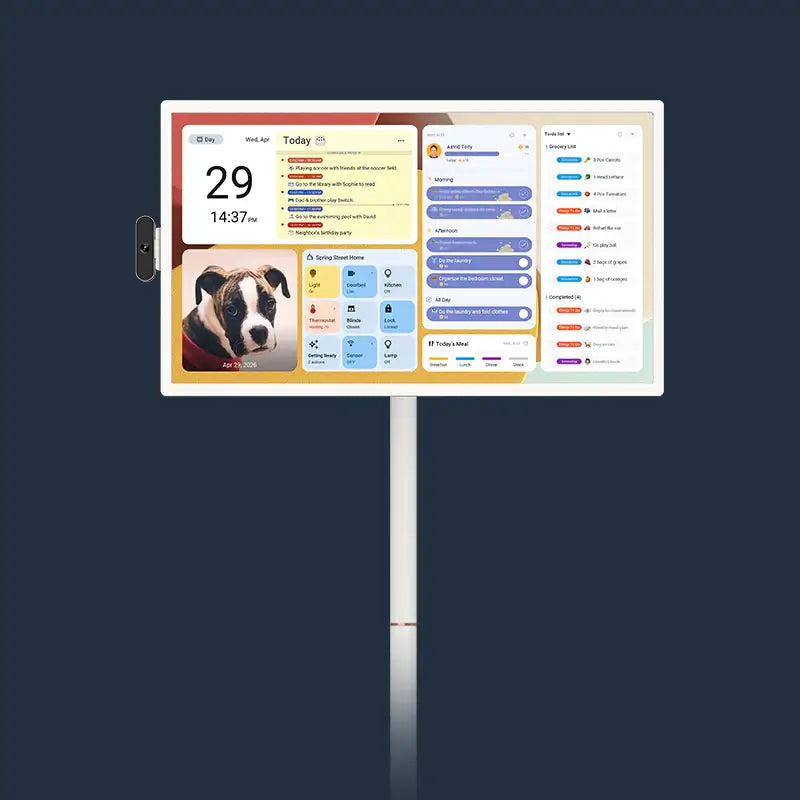
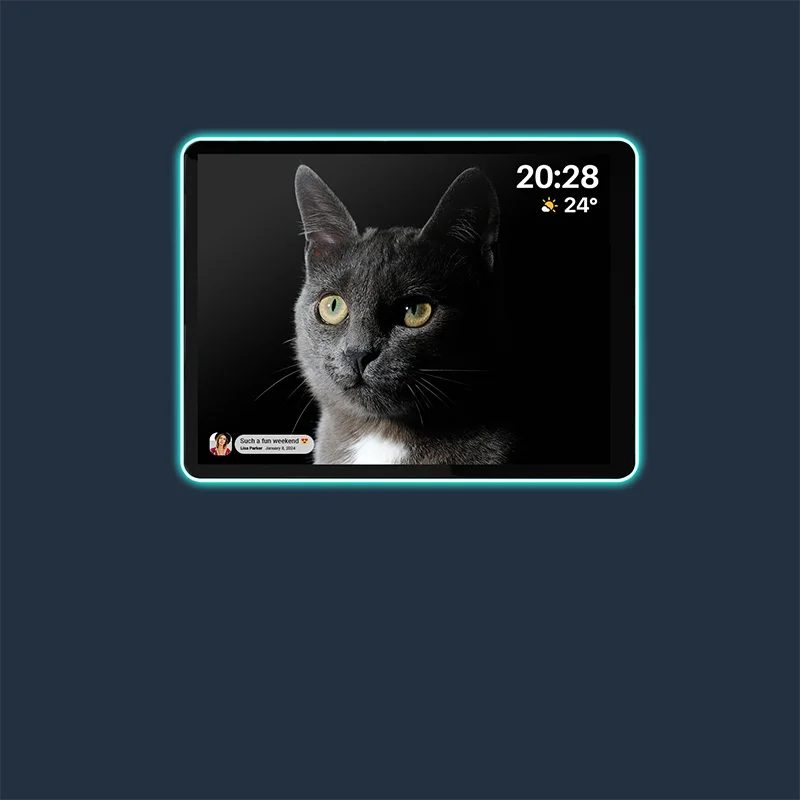
A visible home view helps when certain people keep missing the phone calendar. Maybe a younger child has no phone, a grandparent helps with pickups but rarely opens the app, or a busy parent only checks it at night. A screen in the kitchen or by the door can show that same shared schedule where those people already look. It should mirror the calendar you already use, not become a second calendar someone has to keep in sync by hand. For layout and placement tips, see these shared calendar display ideas.

Two homes are different. Both households need access to the same shared online schedule. A display in one home only helps the people standing in that home.
So the deciding factor is who actually sees the schedule. If everyone reads the phone calendar, keep it and focus on ownership. If someone keeps missing changes, add a view where they already look. If you decide a central home display fits your household, you can compare our Apolosign family digital calendar options. For your next step, spend one week noting who missed a change and where they would have seen it, then make the smallest fix that covers that habit.
FAQs
How often should we revisit recurring activities?
There is no set schedule that fits every family. The natural times are when a season ends, a new school term starts, or a child adds or drops an activity. Those are the points where old series tend to linger and new ones get added on top.
What should we do when an activity pauses for a few weeks?
If the activity will resume on the same schedule, cancel or mark only the paused dates and leave the series in place. If it is coming back on a different day or time, end the old series and start a new one when it restarts. That way, nobody has to guess which entries are real.
Do all calendar apps handle repeating-event edits the same way?
No. Apps can use different labels and offer different reach for an edit, such as one date, future dates, or the whole series. Read the options each time you edit a repeating event. Then open a later date to see whether the change stayed where you meant it to.
Should each child's activities get their own color?
Giving each child or each type of activity a consistent color can make a busy week easier to scan, as long as the household agrees on what each color means. Keep the system small. A few colors that everyone remembers work better than many that nobody can decode.