





The easiest way to move a child from a tablet or handheld game to bedtime without a meltdown is to make the ending predictable. Set a stopping point before the screen turns on, give one advance warning, end the screen, then hand your child straight into a shared visual cue and a ready quiet activity. Learning how to transition kids off screens before bedtime without meltdowns will not erase every hard moment, but it turns a sudden cutoff into an expected next step.
The goal is a smoother handoff, not a guarantee. Some nights will still be rough, especially with a tired or younger child. What changes is how often the ending catches everyone off guard.
Use a predictable five-part screen-to-sleep transition
The smallest routine that helps most families has five parts done in the same order every night: agree on a stopping point, give a warning, end the screen, show one shared cue, and start a quiet activity. According to screen-time guidance for tantrums, a shared plan with warnings and a ready offline activity can make the transition more manageable, though it will not prevent every meltdown.
Set the stopping point before the screen begins
Agree on the stopping point with your child before the tablet or game starts, not after. Tell them what happens right after the screen turns off, such as "then it's bath time," so the ending connects to something familiar instead of feeling like a random cutoff.
Complete the handoff in the same order each night
Preview the ending, turn off the screen, point to the shared cue, and start the quiet activity without a gap in between. Keep your own words short and consistent, such as "time's up, let's go brush teeth." Repeating the same order each night is what makes the routine predictable enough for a child to trust.

Make the ending visible before the screen goes off
Kids handle an ending better when they can see it coming instead of only hearing it announced. Give one early preview, then a final warning, using a cue your child can actually watch.
Give the child a concrete ending to anticipate
Use plain, specific language: "two more minutes, then the screen goes off." Letting your child pick the exact stopping point inside a game, such as after the current level, often reduces pushback because the ending feels chosen rather than imposed.
Choose the simplest visible cue that gets noticed
A kitchen timer, a phone timer, a wall clock, or a shared household display can all work as the visible reminder, as long as it sits where your child and any siblings can see it before the countdown ends. Our visual reminders and countdowns article covers how a shared display can serve this same purpose for other parts of the evening. If you are working toward the American Academy of Pediatrics' recommendation to avoid screens before bedtime, count backward from bedtime and place your warning inside that window.
Give the handheld a clear calming replacement
The empty space right after a screen turns off is where most negotiating happens, so fill it before the screen goes off, not after. Have the next activity physically ready and use one visible cue to mark the shift.
Put the next activity within reach
Lay out pajamas, bath supplies, or a book before the warning even starts. Giving your child one concrete next step, instead of asking them to invent one while upset, removes the moment where a tantrum usually builds. Our after-school routine for kids guide has more examples of prepping the next task in advance so transitions move faster.
Use one shared cue for quiet time
Let the same visible signal, whether a timer, a clock, or a household display, mark the household's shift into quiet time for every child in the room. Treat this cue as a way to make the transition visible and shared, not as something that calms a child on its own; no evidence supports the idea that a visual cue by itself reduces stress or improves sleep.

Adjust the transition for age, siblings, and rushed nights
The five-part sequence stays the same, but how much preview, choice, and adult support you give should shift with the child and the night. Keep the stopping point firm while changing how you get there.
Younger children need concrete repetition
Toddlers and preschoolers usually do better with short phrases, the same cue every night, and a narrow choice like "bath first or pajamas first." Skip long explanations; they add words without adding clarity for a young child.
School-age children can help shape the plan
Older kids can help choose the stopping point or the quiet activity before screen time even starts. Once the plan is set, keep the ending itself in your control so the agreement does not get renegotiated at the last minute.
Siblings and rushed nights need one shared starting signal
Siblings can share one quiet-time cue even if their next tasks differ, such as one child heading to the bath while another reads. On a rushed weeknight, shorten the sequence to one warning, one cue, and one activity rather than adding extra rules. Some children rely on a screen for predictability or as a coping tool, and guidance on screens and neurodivergent kids suggests they may need an agreed stopping point, a repeated warning, and a prepared offline alternative, while the adult still holds the boundary.

When resistance starts, keep the response short and steady
When a child pushes back after the screen ends, use fewer words, not more. Name the feeling, repeat the boundary once, and move toward the prepared next step.
Use fewer words when emotions rise
Say something like "I know you're upset, but screen time is over" and stop there. Avoid a longer explanation or a new negotiation; both tend to stretch out the resistance instead of shortening it. Pediatric guidance on tantrums during screen transitions supports holding the limit with brief, calm language rather than lecturing.
Return to the next small action
Once your child can hear you, point back to the activity you already prepared, such as the bath or the book. Use the same cue and the same simple language from the routine instead of introducing a new reward or consequence in the heat of the moment. Our predictable screen time limits article has more on keeping evening boundaries consistent across the week.
Decide whether your family needs a dedicated ambient display
Most families do not need new equipment to run this routine. A dedicated shared display is worth considering only when several people need to see the same reminder in the same room.
A simple cue is enough for many families
If one parent and one child can already follow a verbal agreement, a phone timer, a kitchen timer, or a wall clock, stick with it. Adding a device when the existing cue already works just creates another screen to manage at night.
A shared display can fit a visibility problem
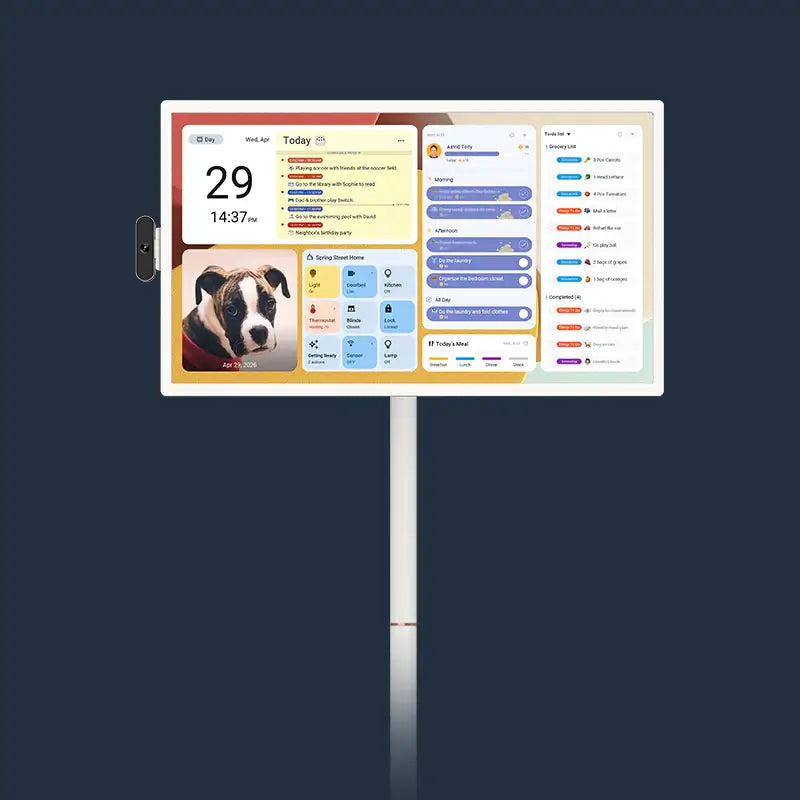
If siblings share a room, or if the household has trouble keeping reminders and countdowns visible in one place, a shared display can help. The Apolosign 21.5" Digital Calendar lists family reminders and countdowns, routine tasks with a points and rewards system, and a customizable dashboard on a 21.5-inch LCD touch screen. We built it as a household organization tool for shared visibility, not as a sleep or calming device, so it fits families who need one persistent place for evening cues rather than families looking for a bedtime treatment.
Choose the lightest routine you can repeat
Start with the simplest version you can actually repeat, such as a basic timer or verbal cue paired with one ready quiet activity. If several people in your home need that reminder visible together, a dedicated display can keep the cue in one place.
Tonight, try preparing the next activity before the screen turns on, then use the same cue and short words at cutoff. When shared visibility solves an actual conflict in your home, explore our digital calendar options, but keep in mind that equipment remains optional for a calmer bedtime.
FAQs
What if my child still has a meltdown after the warning?
Stay brief. Name the feeling once, restate that screen time is over, and avoid a long explanation. Wait until your child can hear you before moving to the next step; adding more words or a new deal usually extends the reaction instead of shortening it.
Is a dedicated visual countdown better than a regular timer?
Not automatically. A kitchen timer, phone timer, or clock works fine when one adult and one child can see and follow it consistently. A dedicated display only adds value when several family members need that same countdown visible in a shared space, such as siblings in one room.
Should the ambient display stay on in a child's bedroom?
Keep a shared evening cue in a common family area rather than running an always-on display in a child's bedroom overnight. The American Academy of Pediatrics recommends keeping screens, including TVs, computers, and smartphones, out of children's bedrooms at night, separate from whatever cue you use earlier in the evening.
How long before bed should screens end?
The American Academy of Pediatrics recommends avoiding screen exposure for one hour before bed. You can use the five-part transition to work backward from that boundary, but treat it as a timing target, not a guarantee of better sleep or fewer meltdowns.