




For a household raising a child with attention-deficit/hyperactivity disorder (ADHD), the deciding factor between a subscription and a no-subscription smart calendar is continuity. Skylight and Hearth Display gate routines, rewards, or setup behind a paid plan, so a missed renewal can pause the visual system a child has built a habit around. Apolosign and Cozyla do not attach a plan to those features today.
What an ADHD Routine Needs From a Shared Screen
Three practical requirements come up repeatedly in ADHD parenting resources, and each one maps to a specific feature on these displays. The routine has to stay visible without a parent prompting it, the passage of time has to be shown rather than described, and feedback for finishing something has to land immediately rather than at the end of a week.
A display delivers all three only while every one of those features is actually switched on. That is where the pricing model stops being a budget question and becomes a routine question.

The Morning That Stalls When the Checklist Is Out of Sight
Mornings tend to break at the same point: a child who is dressed and then stops, because the next three steps are not in front of them. Apolosign’s own blog content describes this using the idea of object permanence, where a task that is not visible is effectively a task that does not exist for the child.
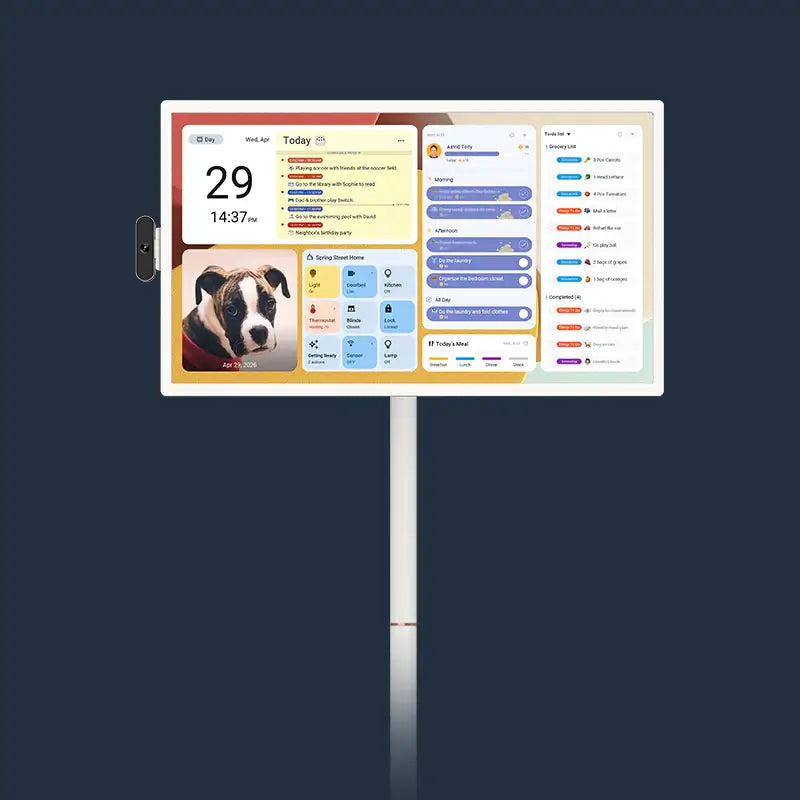
A wall display answers that by keeping the day’s schedule and each child’s task list on screen continuously, in a spot the household already walks past. Nobody has to unlock a phone or remember to open an app for the routine to reappear.
The base calendar view works without a plan on every display compared here, including Skylight’s free tier. What differs is the layer above it: Hearth’s Routines feature, which breaks a morning into visual step-by-step icons and has genuine goodwill among parents of neurodivergent kids, requires an active Family Membership at $9 a month or $86.40 a year, and Hearth’s documentation states that membership is needed to finish setting the display up at all.
Time Blindness and the Fight Over Five More Minutes
Arguments about leaving the house are often about time perception, not defiance. Time blindness, the difficulty in feeling how much time has passed or remains, is a well-described pattern in ADHD, and it is the reason “we leave in twenty minutes” registers differently for some kids than parents expect.
A large color-coded day view converts that abstraction into something spatial, showing the gap between now and soccer practice as a visible distance on the screen. Screen size does real work here, since a child has to read the day from across a room without being asked to come look.
Current lineups differ in how much room they give that view:
- Apolosign offers 15.6-inch, 21.5-inch, 27-inch, and 27-inch 4K models, priced from $279 to $679 on its own store.
- Cozyla Calendar+ 2 comes in 15.6-inch, 24-inch, and 32-inch sizes, from $349.99 up to a 32-inch listed at $764.99.
- Hearth Display sells a single 27-inch size.
- Skylight spans a 10-inch frame, a 15-inch model at around $299.99, and the 27-inch Max at $599.99.
Bigger is not automatically better in a small bedroom, but for a shared kitchen or hallway wall, the larger panels give a whole week of color-coded blocks room to breathe.

Immediate Feedback and Why a Paused Reward System Hurts
Reward systems work for many ADHD kids when the feedback arrives the instant a task is finished, which is why on-screen points and stars land differently than a sticker chart reviewed on Sunday. All four displays build some version of this in, and the mechanics themselves are broadly comparable.
Availability is the real variable. Skylight’s star-based rewards sit inside Calendar Plus at $79 a year per its support pages, and Hearth’s Stars and Rewards belong to the Family Membership. Cozyla includes points and custom rewards with the device, and Apolosign includes its points-based chore rewards system in the purchase price under current pricing, with the points appearing on screen the moment a task is checked off.
Consider what a lapse means for a child who has been earning points toward something for three weeks. The tracker goes quiet for a billing reason the child cannot understand, and the habit that took a month to build has to be restarted once the payment goes through.
Which ADHD-Relevant Features Sit Behind a Paid Plan
The comparison below covers only the features that matter for an ADHD routine, using each brand’s published pricing and support documentation as of August 2026.
| Feature | Apolosign | Cozyla Calendar+ 2 | Skylight Calendar | Hearth Display |
|---|---|---|---|---|
| Shared calendar sync and family view | Included | Included | Included on the free tier | Requires an active membership |
| Always-on visual task lists | Included | Included | Included on the free tier | Requires an active membership |
| Points or stars reward system | Included today | Included | Calendar Plus, $79 a year | Family Membership, $9 a month or $86.40 a year |
| Structured step-by-step routines | Task lists with assigned points | Chores and routines with points | Chore charts, rewards layer paid | Routines feature, membership required |
| Meal planning on the same screen | Included today | Included | Calendar Plus | Family Membership |
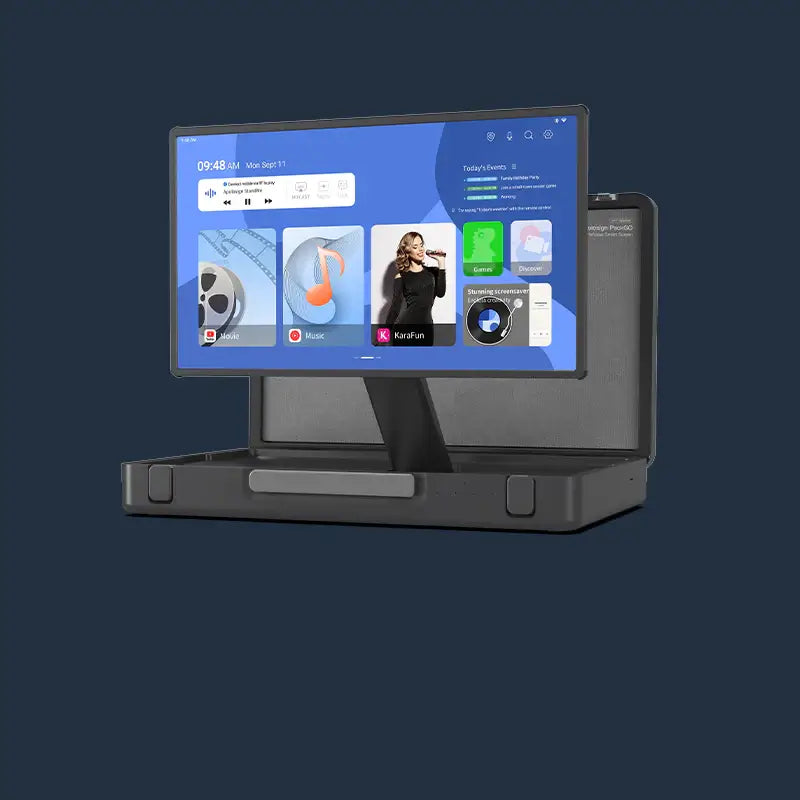
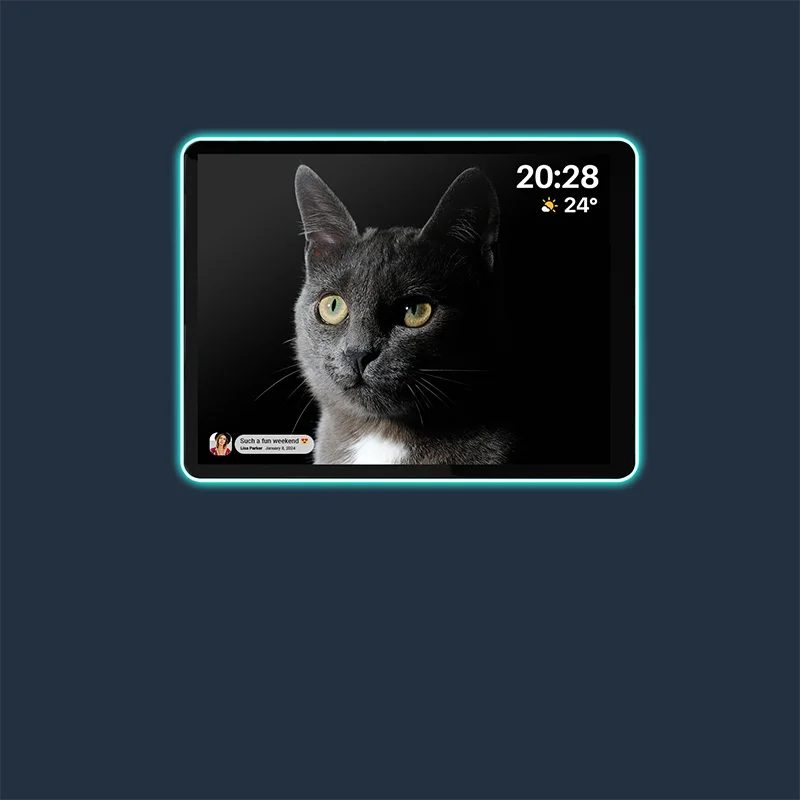
| Photo screensaver during idle hours | Photo album uploads included today | Included | Calendar Plus | Included with membership |
Read down the two right-hand columns and a pattern emerges: the paid plans concentrate on exactly the features an ADHD household leans on hardest, which are the reward loop, the structured routine, and the visual reinforcement.
What an Interrupted System Costs an ADHD Household
A subscription lapse is a different kind of problem here than in a typical family. For most households, losing meal planning for a week is an inconvenience, and for a child who depends on an external structure to start the day, the same interruption can undo weeks of consistency.
Hearth’s position is the strictest, since its support documentation describes the Family Membership as required before onboarding is complete, meaning a household that cancels is left with far less than it started with. Skylight is gentler, keeping the calendar, lists, and basic chore charts on its free tier while the rewards, meal planning, and screensaver stop.
Apolosign and Cozyla owners do not carry that specific risk today, because the routine-critical features on those displays are not conditioned on a renewal under current pricing. That is worth weighing at purchase, when the annual fee looks small, rather than in the middle of a school year.
None of these displays substitute for guidance from a clinician who knows your child. They are tools for holding up a routine somebody has already designed, and the question this article answers is only which of them keeps holding it up without maintenance.
Choose the Setup That Survives a Missed Payment
Start with one question before comparing screen specs: if a card declines next spring, does your child’s morning routine still appear on the screen? A display that answers yes removes a failure point you would otherwise have to manage. Apolosign’s calendar lineup, with its points-based rewards and always-on visual schedule included in the purchase price today, is a practical place to begin that comparison.
FAQ about Smart Calenders for ADHD
Q1: Will a smart calendar reduce how often I have to remind my ADHD child about tasks?
Often, yes, though the effect depends on placement more than on the device. A display works as an external prompt only if it sits where the child already passes during the routine, such as the kitchen or the hallway by the front door. Mounted in a room a child enters twice a day, it turns back into furniture.
Q2: What screen size works best for a child who struggles to read the schedule from across a room?
Something at 21 inches or larger for a shared space, and 15.6 inches is usually enough for a bedroom or desk. The practical test is whether a child can identify their own color-coded block from where they normally stand, not the diagonal measurement on the spec sheet.
Q3: Should the whole family use the calendar, or only the child with ADHD?
Load everyone’s schedule onto it. A screen showing only one child’s tasks reads as a monitoring tool aimed at that child, while a display carrying a parent’s work trip and a sibling’s dentist appointment presents the routine as something the household shares. That framing tends to hold up better over months.
Q4: Can these calendars work for an adult with ADHD rather than a child?
Yes, and the same feature logic applies. Adults tend to use the always-on day view and the dashboard layer more than the reward system, so a display whose scheduling and dashboard features do not sit behind a plan covers the core need, and a paid tier’s value comes down to whether the extras get used.
Q5: How long does it take before a new visual routine actually sticks?
Expect several weeks of active parent involvement before the screen carries the routine on its own, which is precisely the window a billing interruption is most damaging. A display set up ahead of a natural reset point, such as the start of a school term, gives the habit a cleaner run at forming.