


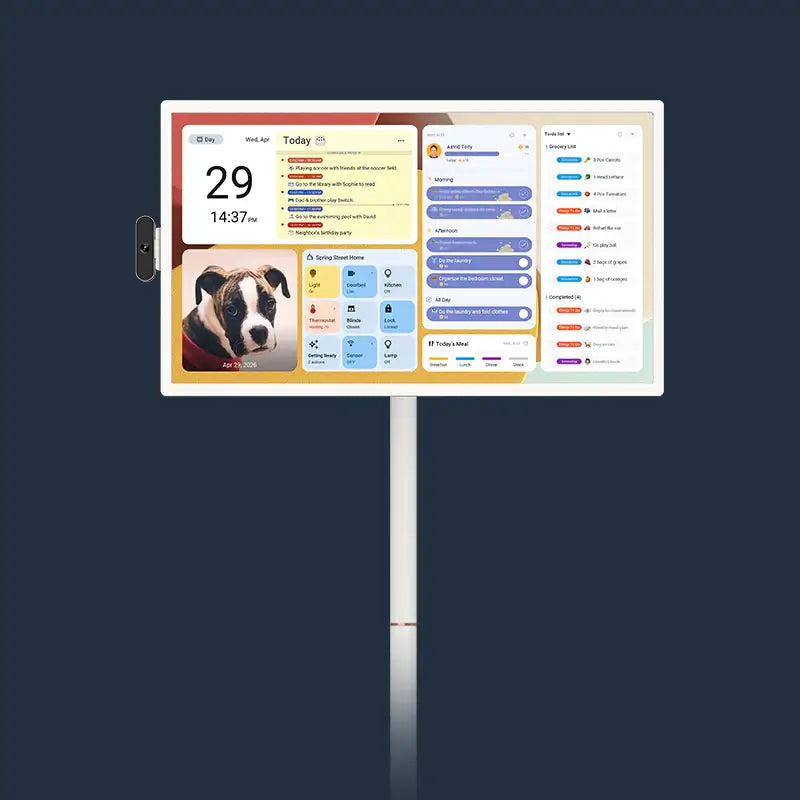
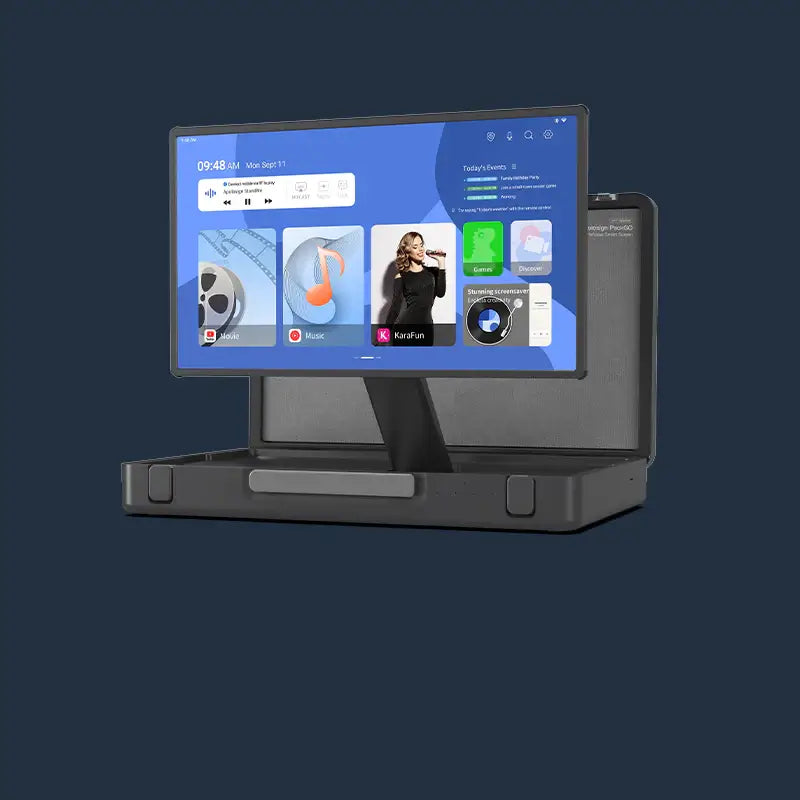
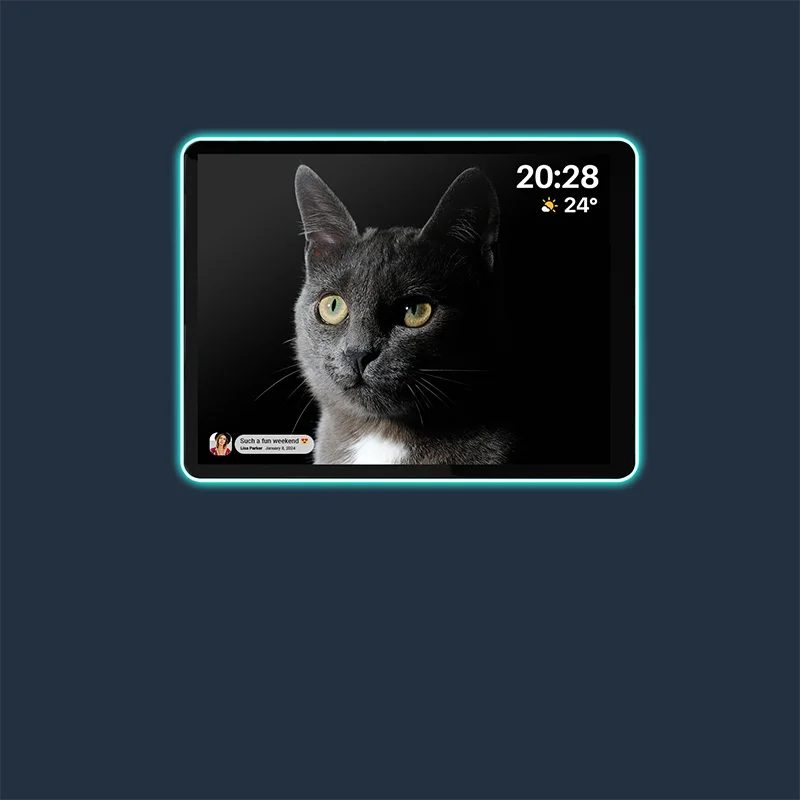


Many households are moving away from scattered wall switches, separate apps, and paper calendars. A large wall-mounted digital display that combines scheduling with smart home controls offers a simpler alternative. Instead of checking multiple devices throughout the day, families can view and manage everything from one clear screen.
This centralized approach reduces daily friction. Lights, temperature, security, and appointments become accessible in one place. The result is a home that feels more organized and responsive to the people living in it.

How Automated Routines Improve Daily Life
Technology works best when it aligns with natural habits rather than requiring constant attention. A well-designed digital display can trigger helpful actions at the right moments. Research from the U.S. Department of Energy confirms that automated routines in smart homes can meaningfully reduce energy consumption while improving household comfort.

In the morning, the first calendar reminder can gradually increase bedroom lighting and open blinds to let in natural light. At the same time, other connected devices in the kitchen can begin preparing for the day. In the evening, the system can slowly dim lights and adjust the temperature to support better sleep.
Common automated sequences include:
- Gentle wake-up — Lighting and blinds respond to the first scheduled event.
- Leaving home — Non-essential devices turn off while security features activate.
- Returning home — Entryway lights turn on and the screen displays relevant updates.
- Night mode — Exterior doors lock and cameras switch to night vision automatically.
These background processes handle repetitive tasks so household members can focus on other priorities.
Customizing Triggers and Adapting to Different Schedules
Users can define their own rules. For example, porch lights can turn on whenever the front gate opens after dark. Sensors throughout the house can trigger specific actions based on time, motion, or other conditions.
The system can also adjust automatically on weekends. Sleep routines become more flexible, and morning alerts can start later to allow extra rest for the whole family.
Bringing Lighting, Climate, and Security into One Interface
Traditional smart home setups often require different apps for different rooms and devices. A centralized smart home panel solves this by putting the most common controls in one location. Studies on smart home electric energy management show that unified interfaces reduce unnecessary device usage and improve overall household energy efficiency.
From a single screen, users can adjust lights in any room, change the thermostat, or check camera feeds while viewing the day's schedule. This reduces the need to pick up a phone for simple tasks. Guests and babysitters can also make basic adjustments without installing separate applications.
Comparison of Control Methods
|
Task |
Traditional Approach |
Centralized Digital Display |
|
Adjusting lights |
Walking to multiple physical switches |
Quick tap or voice command on the main screen |
|
Checking security |
Opening separate apps on a phone |
Viewing live feeds directly on the dashboard |
|
Changing temperature |
Walking to the physical thermostat |
Adjusting from the side panel while viewing calendar |
|
Managing daily schedule |
Checking phone or paper planner |
Always visible on the wall in clear format |
A single, well-placed screen makes these everyday actions faster and more consistent for everyone in the household.
Hands-Free Control with Voice Assistants
Voice commands offer a convenient way to interact with a digital wall display without touching the screen. Many models support Google Assistant, allowing users to perform common tasks through simple spoken requests.
With voice control, you can ask about the weather, play music or podcasts, adjust connected lights, or check live camera feeds. You can also inquire about today's schedule, and the system can read out upcoming events or display them on screen.
It is important to note the current limitations. While Google Assistant works well for viewing schedules and controlling smart home devices, it generally does not support directly adding or editing calendar events through voice input on most wall-mounted displays. For creating new appointments, most users still rely on touch input or syncing from their phone or computer.
This combination of voice for quick actions and touch for detailed schedule management provides a practical balance for busy households. The microphone can usually pick up commands clearly even when there is background noise from appliances or conversations.

Why Open Software Platforms Offer More Long-Term Flexibility
The operating system behind the display affects how adaptable the setup remains over time. Closed systems often limit users to accessories from a single manufacturer. Open platforms, such as those based on Android, allow greater freedom to add third-party tools and maintain compatibility with a wider range of existing devices.
Users can customize the layout, add useful widgets, and create separate profiles for different family members. This openness also makes it easier to keep using older smart home devices instead of replacing them when upgrading the main display.
Privacy and Ongoing Costs
Many people worry about microphones and cameras in always-on devices. Some displays include physical switches that completely disconnect these components from power when privacy is desired. NIST guidelines on privacy and security for smart home speakers recommend hardware-level controls as the most reliable method for protecting household audio and video data.
Another important consideration is ongoing expenses. Some smart home platforms require subscriptions for full features or cloud services. Displays that offer core functions without recurring fees provide more predictable long-term costs and reduce the risk of features being locked behind paywalls later. For a detailed breakdown, the digital calendar subscription vs one-time cost guide covers what to watch for before buying.
Regular software updates remain important for security. Devices that receive timely updates without additional charges help maintain protection against new vulnerabilities.
Frequently Asked Questions
Do these digital displays require monthly payments to sync with online calendars?
No. Most quality models allow free connection to existing Google, Apple, or Outlook calendars.
Can different family members use different colors for their schedules on the same screen?
Yes. Many systems support color-coded profiles so each person can quickly identify their own appointments.
Can users add third-party smart home tools?
Open platforms generally allow users to install compatible apps from standard app stores, making it easier to connect devices from different brands.
How is privacy protected when the screen is not actively being used?
Some models include physical hardware switches that cut power to the microphone and camera entirely.
Can the screen be mounted vertically or horizontally?
Most modern displays automatically adjust orientation and support both portrait and landscape mounting using standard brackets.
Choosing the Right Solution for Your Home
A digital wall calendar works best when it matches the way your household actually operates. Consider how many people will use it, which calendars you need to sync, and whether you want the flexibility to add new devices and apps over time. For practical placement advice, the digital calendar for home tips guide covers the most common setup decisions families face.
Some modern solutions, such as the ApoloSign digital wall calendar, combine an open Android system with subscription-free operation and clear family scheduling features. For a full overview of how these displays function as a family command center, the dedicated guide walks through every key capability.
The most effective setups are those that quietly handle routine tasks in the background while remaining simple enough for every member of the household to use comfortably.