






When the same family schedule conflict shows up every week, stop solving it as a one-time problem. Change the recurring arrangement behind it instead. Name the exact slot that keeps colliding, decide what can actually move or who else can cover it, and make that the new default.
Then write the new rule where everyone affected can see it. Revisit it if the clash or the extra work keeps coming back. A better default can cut down on the same Sunday-night negotiation over the same Tuesday pickup.
Change the recurring rule, not just this week's plan
A weekly clash is a pattern, so the fix belongs in the pattern. Map the collision first, then build the new default around the piece that can change.
Pinpoint the repeated collision
Write the clash as one plain sentence: the day, the time, who has to be where, and what collides. For example: "Tuesdays at 5:30 p.m., one child has soccer across town, the other has piano near school, and only one parent is off work by then."
Next, mark each piece as fixed or flexible. Fixed items are things your family can't change, like a work shift, school dismissal, or a game time set by the league. Flexible items are things you control, like a lesson time you booked, a grocery run, or a household chore. Also list who else could step in: another parent, a grandparent, an older sibling, or a carpool family.
This takes five minutes, and it narrows the choice fast. Once you see which part is locked, you stop debating the parts that were never going to move.
Build the new default around what can move
Pick the change that matches what you found, and make it the standing rule.
| What you found | Default to try | Watch for |
|---|---|---|
| One commitment is flexible | Move it to a new standing time | The new slot hitting something else |
| Both fixed, two adults free | Each adult covers one, then switch | One adult always getting the harder drive |
| A pickup or chore keeps colliding | Give it a new owner on that day | The new owner's total load |
| Nothing moves, no one can cover | Rethink participation or priorities | A calendar can't solve this one |

The right row depends on who can actually be present, not on a rule about which activity matters more. USA Football describes one family's approach to two kids' games at the same time: one parent goes to each game, and they switch parent and child at the next conflict. That works only because two adults are free. With one adult, a rotation can't create a second driver. Once the split is set, our after-school plan for sports days helps with the rush out the door.
Parents living in two homes have more pieces to line up. AFCC's parenting-schedule guidance says to consider school, work, and other activities when planning the schedule. It also notes that when one parent carried more day-to-day duties, that can open a talk about how to share them going forward.
Sometimes the clash is a child's chore, like taking out the trash on practice night. For chores, the American Academy of Pediatrics suggests holding regular family meetings. Use them to review progress, ask kids for their ideas about chores, and avoid overloading them. That meeting is a natural place to move the chore to a lighter night.
Make the new plan visible and name who owns updates
A new rule only helps if the people it affects know about it. Put it in one place, give one person the job of updating it, and agree on how changes get shared.
Start with one current schedule. Your phone calendar is enough if everyone affected actually opens it. It falls short when a grandparent doesn't use the app, a younger child can't read it, or a teen tunes out notifications. In those cases, a printed weekly sheet or a shared screen at home may reach people better.

Next, name one update owner for the recurring rule. Here's how that can look: Dad owns the Tuesday entry. If the plan changes, he edits it and texts the other adult, who replies "got it." The reply matters because it tells him the change landed, so nobody shows up at the wrong field. Teens with their own practices can add those entries themselves, which is one way to involve teens in planning while the owner keeps the shared default straight.
Across two homes, write the rule down. The Texas Attorney General's co-parenting guide says a parenting plan can be a formal legal document or an informal plan both parents agree to. Its sample covers when kids spend time with each parent on a normal basis, who makes day-to-day decisions, and how temporary and permanent changes will be made. The guide notes its sample isn't designed to take the place of a legal order.
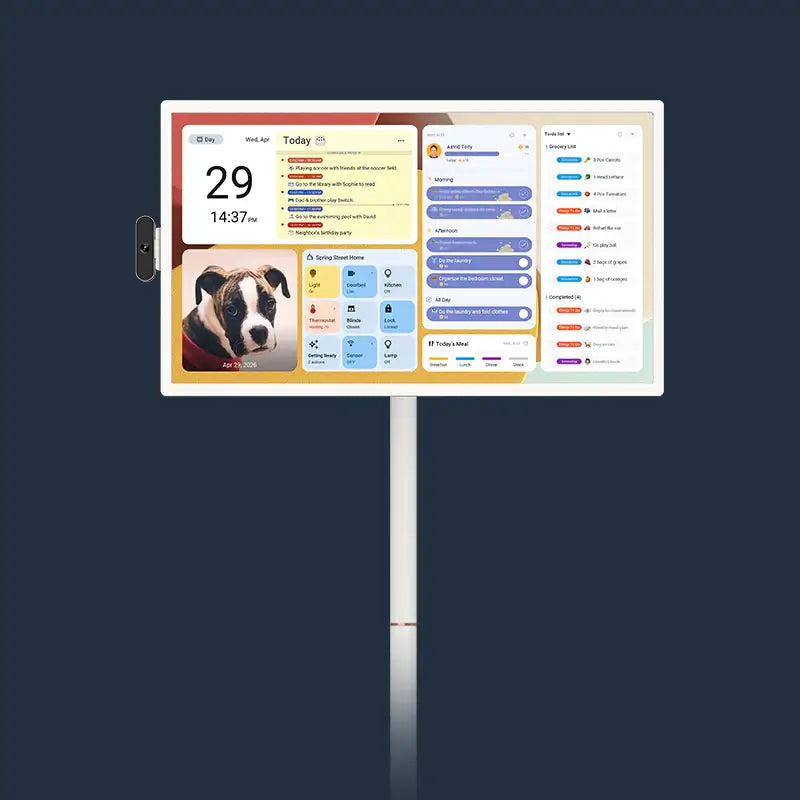
For two-home or co-parenting arrangements, start with a shared online calendar so both households work from the same schedule. A dedicated home screen, like our Apolosign digital calendars, serves as the local visible layer of that shared calendar on the wall, letting kids and caregivers see updates without opening an app. Keep editing permissions clear: agree on who can edit entries and who has view-only access, with one named parent confirming any schedule changes before they go live. Either way, a calendar records the agreement. It can't put one adult in two places at 5:30 p.m.
Revisit the plan if the conflict or the burden remains
Judge the new default by what happens, not by how many weeks you've tried it. Each time the old slot comes around, look for these signs:
- The original overlap came back. The change missed the locked piece. Go back to your fixed and flexible list and look for the item you assumed could move.
- People still ask "who's got pickup?" Coverage isn't clear yet. Tighten the update owner's job or the "got it" reply step.
- The work landed on one person. One adult now drives every week, or one child's chore load grew. Rebalance the split or add a rotation.
- More than one thing feels off. Reopen one rule at a time, so you can tell which change made the difference.
A short midweek schedule check is a good time to run through these signs before the weekend gets busy.
In one home, the fix comes down to a coverage choice: move the flexible activity, split the slot between available adults, or hand the task to someone else. Across two homes, the same choice also needs a written recurring plan both adults agree on, plus a clear way to change it. In both cases, build the change around the commitment that can actually move. This week, write down the one slot that keeps colliding and mark each piece fixed or flexible. If keeping that schedule in front of everyone is the missing step, browse our digital calendar collection to find a shared setup that works for your home.
FAQs
What if both commitments are fixed and nobody else can cover?
Then no schedule change will solve it yet. The real choice is about participation. Your family might pause one activity for a season, pick a different team or class time next sign-up period, or find outside coverage like a carpool. Name that trade-off out loud so the same debate doesn't restart every week.
Can a shared calendar fix family schedule conflicts on its own?
No. A shared calendar shows everyone the plan, but it can't make a second adult available or move a game time. It's useful after you decide the new default. It keeps the rule visible and gives the update owner one place to make changes.
How do we keep track of whose turn it is in a rotation?
Write the next turn into the schedule when you set the current one. For example, mark this week's game as "Mom with Sam, Dad with Ava" and next conflict as the swap. That way no one has to remember the last assignment, and the switch happens without a new conversation.