





Label any plan that isn't final as TENTATIVE, name one person who owns the decision, and set a decide-by date and time. Then write HOLD or NO HOLD so everyone else knows whether to keep that time free. When the deadline comes, the owner confirms the plan, cancels it, or renews it on purpose.
This small habit stops tentative family plans from quietly turning into obligations nobody agreed to. It works on the shared calendar you already use.
Use one clear format for tentative plans.
The fix starts with how the event is written, so no one has to guess what it means. A family-calendar guide from Public Storage advises families to keep tentative plans visibly tentative, because a proposed event and a confirmed one shouldn't look the same when they compete for the same time.
Our suggested format builds on that label with three more fields. Put them in the event title or the first line of the notes, wherever your family looks first.
| Field | What to write |
|---|---|
| Status | The word TENTATIVE, at the start |
| Plan | A short name and the time it would take |
| Owner | One person who makes the call |
| Decide by | A specific date and time |
| Hold | HOLD plus who or what time, or NO HOLD |
Here is an illustrative entry: "TENTATIVE: Lake day with cousins, Sat 10 am to 4 pm. Owner: Dana. Decide by Thu 8 pm. NO HOLD." Anyone who glances at it knows the plan is open, who to ask, and when the answer is due.
The hold field does the most work. HOLD means the named people keep that time free until the deadline, so write who it covers, such as "HOLD Dana and kids." NO HOLD means everyone else is free to make other plans for that time. We also suggest one house rule: a hold ends at the deadline unless the owner renews it. That way, family members never have to work out on their own whether to schedule around a maybe.

Make the rule work for your household.
The format only helps if the right people see it. How you make it visible depends on whether your family actually checks the shared calendar.
If everyone checks the shared calendar
Keep using what you have. If the people affected by a plan look at the shared phone calendar every day or two, you don't need a new app or a new device. Add the tentative entry to the calendar you use to share family schedules, not to someone's personal calendar, so everyone it affects can see it. Let the owner be the only person who edits that entry. One editor means the status, deadline, and hold always reflect the owner's latest decision, and nobody wonders who changed what.
If updates get missed on phones
Picture this: Dana adds the lake day for Saturday. Sam is planning Saturday errands, like a grocery run and an oil change. If the entry says NO HOLD, Sam can book the oil change for 11 am without asking. If it says "HOLD Sam and kids until Thu 8 pm," Sam waits for the answer or moves errands to Sunday.
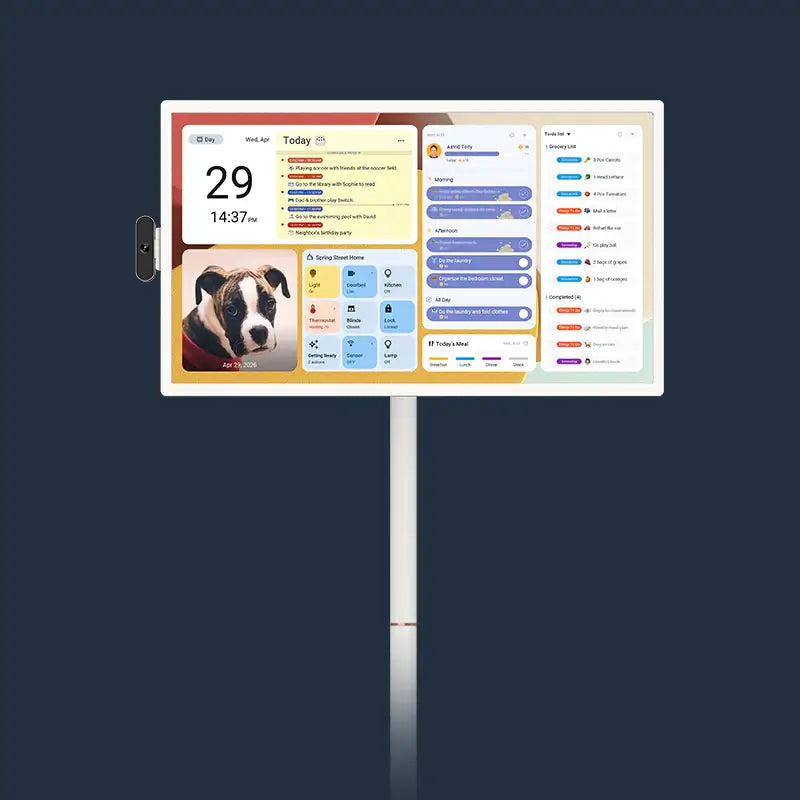
That only works if Sam sees the entry. In some homes, the shared calendar is fine but nobody opens it on their phone. A screen in a common room can show that same shared calendar where people already walk by. It's a visibility layer, not a second calendar to keep up. In one sponsored review of the 21.5-inch Apolosign Digital Calendar, the reviewer describes it hanging in the kitchen and becoming the spot the whole house checks on the way out the door. A centralized family calendar display helps people notice plans. The owner still has to make the call by the deadline.

Close the loop at the deadline.
A deadline only helps if someone acts on it. At the decide-by time, the owner has three moves: confirm, cancel, or renew.
When the plan is confirmed or canceled
Update the event first, then tell people. For a confirmed plan, remove the word TENTATIVE and the hold line so it reads like any other commitment. For a canceled plan, delete it or mark it CANCELED so the time is clearly open again.
Next, send a quick text to anyone affected. The Public Storage guide notes that changing an event doesn't mean everyone affected has seen it, so families should communicate changes directly to affected family members when the change matters. If your family uses Google's family calendar, Google's page on family calendar notification settings explains how to adjust reminders for upcoming events. Google also says members don't get a notification when another member creates, edits, or deletes an event, which is why the text still matters.
The same guide suggests you review pending decisions and assign remaining questions. A short mid-week family schedule check is a natural time to scan every TENTATIVE entry and spot deadlines that are coming up.
When no decision is ready
Let the hold end by default. Under our suggested rule, an undecided plan loses its hold at the deadline unless the owner renews it on purpose. Silence should never keep someone's Saturday blocked.
To renew, the owner updates two things: a new decide-by time and a fresh HOLD or NO HOLD line. For example, "Decide by Fri noon. HOLD Dana only." Then the owner sends a one-line message: "Lake day is still unsure. New deadline is Friday at noon. Only my time is held now." Sam now knows the errands can go back on Saturday.
Start with Your Next Tentative Plan
If your family reliably checks the shared phone calendar, the format and a quick text are all you need. If plans keep getting missed on phones, the same calendar may work better when it's also visible at home, and you can look at our Apolosign digital calendars for that role. Either way, clearly write the status as HOLD or NO HOLD on the very next plan that isn't final.
FAQs
What if two tentative plans land on the same time?
Both can stay on the calendar as TENTATIVE. The issue is the hold. A good household rule is that only one plan can HOLD the same person at the same time, so the two owners agree which one keeps the hold. The other switches to NO HOLD until one plan is settled.
Is a color code enough to show a plan is tentative?
Color can help, but it is easy to miss on a small screen or a quick glance, and not everyone remembers what each color means. The word TENTATIVE in the title shows up in every view and in notifications. Use color as an extra signal, not the only one.
Who owns the plan if someone outside the family is organizing it?
The owner is the family member who will get the final answer and update the calendar. If a friend is hosting the lake day, the family member in touch with that friend owns the entry and the deadline. That keeps one person inside the house responsible for closing it out.
What should we do with a plan that keeps getting renewed?
After a couple of renewals, switch it to NO HOLD or take it off the calendar and keep it as an idea instead. A plan that never gets decided shouldn't keep blocking other people's time. If it firms up later, add it back with a new deadline.